


Our News and Stories
Supporting families through affordable childcare
“At the Association of Neighbourhood Houses of BC, we will certainly opt in to the child-care fee reduction initiative,” said Deb Bryant, CEO of ANHBC. “We’re glad to be part of an initiative that provides some financial relief to the families we serve.”
Getting SMART with rock star habits
Wearing his favourite checkered socks and his best pair of blue jeans, Dustin Hogan, a professional speaker and trainer joined the Wednesday English Conversation Class on March 7 to inspire us to set SMART (specific, measureable, articulate, realistic, and timely) goals.
Social Inclusion: Barb’s Story
Barb was homeless for eight months and suffering from multiple barriers and mental health issues–including post-traumatic stress disorder (PTSD) and depression. Originally from Brunswick House First Nation outside of Chapleau, Ontario, Barb’s poor health kept her indoors after she moved to the Mount Pleasant neighbourhood. From then on, she isolated herself from the outside world.
Social Inclusion: Kiko’s Story
With a lack of all-ages, safe, sober spaces to meet other LGBTQ2S youth and express one’s identity, it’s easy to feel like the only queer in your community.
This is exactly what Kiko was facing in high school upon moving to a completely new community, feeling isolated and struggling with mental illness at 16 years old. Just as Kiko was beginning to come to terms with their identity, it became harder for them to relate to both straight and cis friends…and harder to express themself.
Social Inclusion: John’s story
John came to the Cedar Cottage Neighbourhood House (CCNH) as a quiet and timid eighth grader who struggled to connect with his peers and others within the community. Before joining CCNH, John’s world had felt quite small… simply going from school to home most days. But slowly and over time, this neighbourhood house grew to be like a second home to John and allowed him to flourish in his community.
Social Inclusion: Masi’s story
An avid cook, Masi also often shares her food with staff and residents. She participates in potluck lunches at Kits House, where she shares the Persian food that she has prepared alongside other participants. She and her husband also share their love of music with the local community by performing the violin and drums at various Kits House events. Despite the language barrier, Masi has been on several trips organized by Kits House over the past year, including visits to the George C. Reifel Migratory Bird Sanctuary, Grouse Mountain, the H.R. MacMillan Space Center and UBC Botanical Garden.
Social Inclusion: J.L.’s story
J.L. is a participant in Gordon Neighbourhood House’s Seniors in Action program, which promotes physical activity, social inclusion and independence for seniors who live in Vancouver’s West End. Shortly after the death of her husband about a year ago, J.L.’s neighbour started to bring her to the community lunches at Gordon House to meet new people and socialize with other seniors.
How to save a life: Front line stories and overdose prevention
More than 50 people gathered at Mount Pleasant Neighbourhood House on October 11 to hear first-hand accounts from five storytellers whose lives are deeply touched by the fentanyl overdose crisis. This event marked the first in a series of six dialogues and overdose prevention trainings at neighbourhood houses around the city, in partnership with Megaphone Magazine and CBC Vancouver.
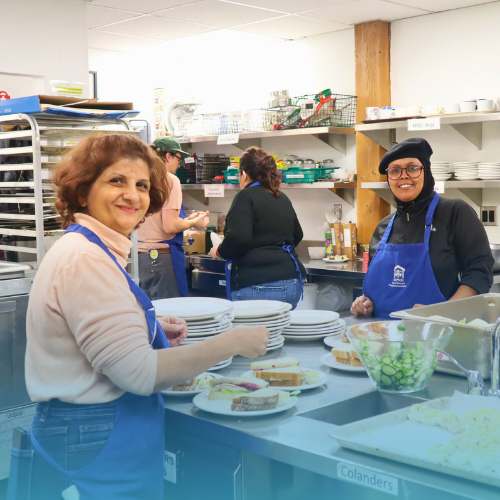
Feeding a community: Insights into Mount Pleasant’s food programs
For Aya, MPNH was “el punto de partide (a point of departure) to try new things, to be more comfortable with people. It took me out of my depression, the loneliness I felt,” she explains. “Now I feel useful, I feel happy and I feel more connected.”
This sense of connection is especially helpful for newcomers struggling to meet new people while mastering a second language. Of people surveyed in this report, nearlly 78% state that the food programs have helped them improve their English language skills, crediting the “practical, hands-on training” they receive from instructors and peer-leaders in the program.